Star Trek Comes to Your Classroom: How to Use the Screenless Display to Train Your Students

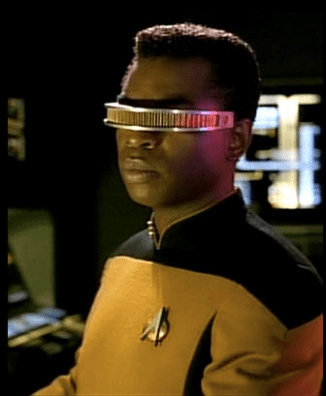
screenless displaysScreenless display technology has been used in science fiction for decades, but this advanced display system has also been worked into a usable format over the last few years.The development of Google Glass in 2012 brought this technology to the forefront. It also created a wide range of possibilities in terms of how this technology could be used.

So how can you use the screenless display to train your students? From the standpoint of healthcare, how can you use screenless displays to train medical personnel and safeguard patient information? A few benefits to the healthcare field have already been realized, but many more may still be on the horizon.

How Screenless Displays Work

There are three main categories of screenless displays that come in the form of a wearable device. The first is the light guide optical element (LOE) device. This looks like a pair of glasses that enables users to view a see-through display imported from their phones or other digital device. The image is projected onto the thin glass of the device.

The retinal scanning device (RSD) and the virtual retinal display (VRD) work in almost the same way as each other, but using different equipment. In these cases, an image is projected directly onto the retina. VRD has been developing for over two decades, but more compact and easily accessible forms with better quality display are now being developed.

There is another type of screenless display that does not require a wearable device to view the object—hologram technology. The way this works is through a precise setup of lasers, mirrors and film. The laser light is guided by mirrors, going through a beam splitter, and each branch of the split beam goes through a diverging lens, which widens the beams. One beam goes straight to a photographic emulsion, while the other hits the object then is guided to the emulsion. The disruption caused by the difference in the two beams creates a viewable hologram.

How to Use Screenless Displays for Healthcare Training

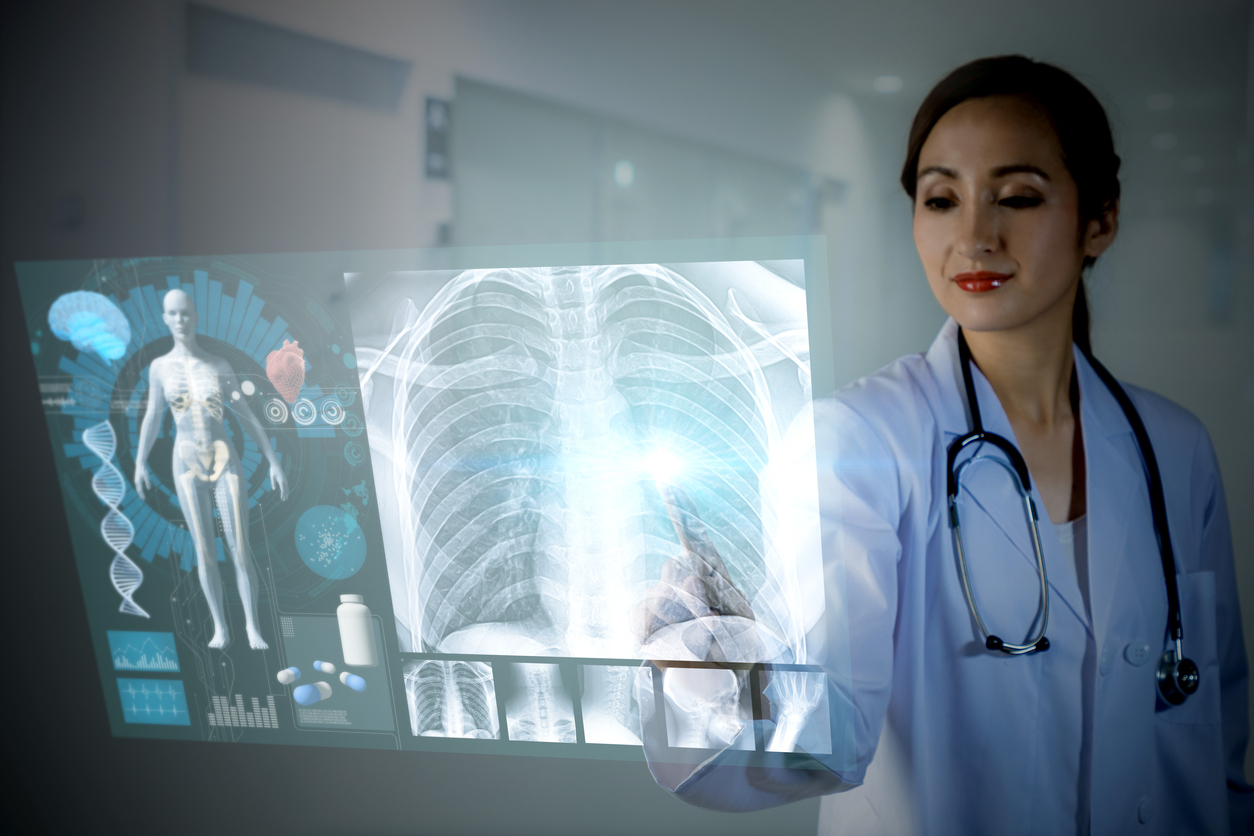
All forms of screenless displays can be used for healthcare training. Each one can provide a large display of germs, cells, anatomy, or anything else that’s not easily seen with the naked eye. The case of holograms is especially helpful over screen displays because students and instructors can view a 3D image together and address any questions by interacting with the display.

How Screenless Display Improve Security

Wearable screenless devices may be best for protecting patients’ privacy. Healthcare information needs to be safeguarded and there are HIPPA rules that employees should follow, but mistakes do happen. Wearable screenless displays would cut down on the risk because the information would only be seen by the person wearing the device. No one could look over their should at their screen, they wouldn’t have to remember to lock their computer while stepping away. Patient information would only be available to the people meant to see it.

To learn more about advances in healthcare training or how Avidity Medical Design is striving to innovate healthcare education platforms, feel free to contact us.

Ten Effective Ways to Use LinkedIn for Healthcare Education Networking

ten ways to use LinkedIn for healthcare education networkingLinkedIn has over 300 million users and 2 new users join every second. These statistics put LinkedIn well on its way to achieving its stated goal of 3 billion total users. This immense and fast-growing network of professionals is a gold mine to numerous professions, and healthcare education is one of them. Here are ten ways to use LinkedIn for healthcare education networking:

  1. Start big – A simple initial search for “healthcare educator” returns over 74,000 results. Large numbers are encouraging when starting out because it means you have lots of room to narrow your focus and find the contacts you want to make.
  2. Narrow the field – Increase the fidelity of your results by adding on additional keywords to your initial search. Using the example search above, the next step would be to add a location, institution or specialty. For example, “healthcare educator Iowa” returns a more manageable 900+ results. Keep narrowing until you have between 10 and 25 results to work with.
  3. Reach out – Once you have sufficiently narrowed your results to a pool of professionals that best suit your interests, take the time to read through their profiles. Hit the connect button and add to your network.
  4. Make sure your profile is complete – Listing degrees and certifications, like M.S. in Instructional and Performance Technology or certified in Dreamweaver will allow your profile to show up in searches done by other healthcare educators.
  5. Join relevant groups – There are at least 5 groups for healthcare educators. Groups allow you to interact with large groups of people that may not have appeared in your previous searches.
  6. Leave your comfort zone – Search for certifications that you might aspire to but don’t yet hold. Networking with other professionals who have already achieved your goals can be a valuable source of lessons learned.
  7. Remember your past – Think back to individuals you may have worked with or gone to school with who had interesting ideas for healthcare education. Chances are they have had a chance to implement those ideas or formulate new ones. They can be a valuable source of inspiration.
  8. Read the articles – In addition to individuals and positions, you can search LinkedIn for articles on healthcare education, tools and technology. Connect with authors of articles that you find interesting or informative.
  9. Follow up on views – As you spend more time on LinkedIn and make more connections, you will receive more views – other people looking at your profile. Be sure to view their profiles after receiving notification, and make connections.
  10. Go beyond the first level – Chances are that the individuals you connect with have other worthy connections. Don’t be afraid to look through their profiles and connect with healthcare educators once or twice removed.

If you have questions about any aspect of healthcare education, please don’t hesitate to contact us.

The Latest Trends in Cancer Treatment: Targeted Cancer Drugs

the latest trends in cancer treatment 2014

One of the latest trends in cancer treatment for 2014 is the use of targeted drugs that attack the genetic “on switch” for cancer. According to recent story on CBS News, one of these new approaches to fighting cancer is a type of targeted cancer therapy that could one day eliminate conventional chemotherapy as we know it.

Chemotherapy, as it is currently practiced, involves delivering powerful cancer-fighting drugs intravenously to the site of a tumor. While this type of treatment can reduce or even eliminate a tumor, it also wreaks havoc on surrounding healthy tissue. This makes cancer patients ill and weak. Conventional chemotherapy is like World War II era carpet bombing: a powerful attack but with a lot of collateral damage remaining.

medications on white surface

Targeted drugs are more like smart bombs. A recent research project describes a new treatment that uses the tumors own genetic sequence to attack it. Researchers sequenced 10 genes in lung cancer patients and in two thirds of them found the “on switch” that causes cancers to manifest and grow. The new drug, an oral medication that is selected according to the results of the genetic sequencing of the tumors, turns that switch to “off,” keeping the cancer under control for a significant period of time.

Targeted drugs that attack the genetic “on switch” for cancer do not currently represent a cure for cancer. What they may do, however, is to turn cancer into a chronic disease, rather than a fatal disease. Although there may still be some adverse health effects, these drugs may keep the cancer from metastasizing, or spreading to other areas of the body, thereby allowing patients to live longer and healthier lives. Targeted drugs may hopefully work for many different types of cancer, and may buy patients enough time to allow real cures to come through the pipeline.

young medical professional using clear tablet to study x-ray and other medical data

For more healthcare news, follow the Avidity Medical Design Blog. If you are interested in taking an online healthcare course, visit Avidity Medical Design Academy. If you like scented candles and soaps, visit Avidity Medical Scentations to purchase scented candles and soaps with a healthcare inspiration.

The Latest Trends in Cancer Treatment for 2014: Targeted Cancer Drugs

the latest trends in cancer treatment 2014One of the latest trends in cancer treatment for 2014 is the use of targeted drugs that attack the genetic “on switch” for cancer. According to recent story on CBS News, one of these new approaches to fighting cancer is a type of targeted cancer therapy that could one day eliminate conventional chemotherapy as we know it.

Chemotherapy, as it is currently practiced, involves delivering powerful cancer-fighting drugs intravenously to the site of a tumor. While this type of treatment can reduce or even eliminate a tumor, it also wreaks havoc on surrounding healthy tissue. This makes cancer patients ill and weak. Conventional chemotherapy is like World War II era carpet bombing: a powerful attack but with a lot of collateral damage remaining.

Targeted drugs are more like smart bombs. A recent research project describes a new treatment that uses the tumors own genetic sequence to attack it. Researchers sequenced 10 genes in lung cancer patients and in two thirds of them found the “on switch” that causes cancers to manifest and grow. The new drug, an oral medication that is selected according to the results of the genetic sequencing of the tumors, turns that switch to “off,” keeping the cancer under control for a significant period of time.

Targeted drugs that attack the genetic “on switch” for cancer do not currently represent a cure for cancer. What they may do, however, is to turn cancer into a chronic disease, rather than a fatal disease. Although there may still be some adverse health effects, these drugs may keep the cancer from metastasizing, or spreading to other areas of the body, thereby allowing patients to live longer and healthier lives. Targeted drugs may hopefully work for many different types of cancer, and may buy patients enough time to allow real cures to come through the pipeline.

For more information contact us.

The Future of Electronic Medical Records: Sharing as Well as Storing

The Future of Electronic Medical RecordsWhat is the Future of Electronic Medical Records? Most healthcare providers are slowly but surely transitioning from the traditional hard copy paper record to the electronic medical record that is more easily entered, stored, and accessed. Tablets have replaced notepads for doctors dictating the patient’s medical history, review of systems, physical examination, and factors in medical decisionmaking. This has freed the healthcare provider from spending additional time entering data, and reduced the amount of time taken away from patient care. Tablets can also take visual images on the spot as needed.

The future, according to KERA, a north Texas public radio station, is tying all these records into a network that primary care physicians, specialists, and other healthcare providers can share. For example, it is still very common for patients to have to fill out the same forms over and over again when seeing other doctors, including specialists to whom he or she has been referred by the primary care physician. One reason is that various healthcare providers have different medical record software programs that do not necessarily communicate with one another over a network.

In the future, different specialists will be able to access medical information on a patient instantaneously, including notes from the primary care physician, and add data if necessary.  This would streamline the recordkeeping process that has been the bane of healthcare providers and free them up to spend more time taking care of patients.  As a bonus, the system could be geared to alert the primary care physician instantly when a patient has been admitted to the emergency room, or a record has been updated by another physician.

In the present, electronic medical records store patient information. In the future, healthcare professionals will find new ways to access and share patient information that goes beyond storing it in the patient record.

To learn more about how to read your own medical record, enroll in the course entitled, “How to Read Your Own Medical Record (Learn What is in YOUR Medical Files!)” offered by Avidity Medical Design Academy.

Watch two sample lectures below:

Lecture 15 from “How to Read Your Own Medical Records (Learn What is in YOUR Medical Files!)”
Lecture 16 from “How to Read Your Own Medical Records (Learn What is in YOUR Medical Files!)”

Click here to take the full course for only $29.99!

How To Use Twitter To Train Healthcare Students In 3 Steps

What can be said in 140 characters? To be honest a lot can be said between the first and last word that can change the world. It can start a revolution or raise awareness for a cause. The power of Twitter to shape the world is undeniable.

It brings people from all over the world into the global town square to air their thoughts, hopes and dreams for the world to latch on to. Twitter is a powerful tool that can also be used to change the worldTwitter healthcare and educate healthcare students at the same time. Some might say; how can Twitter possible be used to educate healthcare students? The answer is based on 3 simple concepts:

Study In Real Time

Utilizing Twitter to train healthcare students is easy once you set up your Twitter account.  Twitter allows you to communicate instantaneously with anyone on the platform.

This allows you to have real time conversations with your cohort about study material, class assignments and other relevant information. Organizing a study session is as simple as asking your friends to follow you and starting a conversation.

The average person reads about 300 words per minute, so a study session should be easy for everyone to keep up with.

The Hashtag

The # sign or hashtag is by far the most important symbol in the Twitterverse. It serves a dual purpose. It allows you to organize your tweets and helps you find them when you need them.

For example say a student wants to start a subject on ICD-10, all they would have to do is enter #ICD-10 and the tweets covering this subject with this hashtag handle can be found with a search.

The hashtag makes finding and organizing your conversations efficient and easy to manage. Hashtags allow you to create communities of people interested in the same topic by making it easier for them to find and share info related to it.

Finding Information You Need

Along with bringing together people from all walks of life, Twitter is also an effective tool for disseminating information. Millions of Twitter users use their accounts to promote a certain agenda, spread ideas and information.

Twitter allows you to link and share web pages that you think are important. While researching information for an assignment you may find something interesting on the web.

The odds are that this website will have a Twitter share button for you to click. This allows your followers and classmates to see the website you shared making researching information a breeze.

When these three concepts are blended together you get a platform that allows you to organize in groups, find topics and research information effortlessly. Twitter can serve as a valuable tool in educating the next generation of healthcare professionals on a platform that they are accustomed to using. If you have any questions about this topic please contact us today.

ICD-10 Delay: What It Means to Healthcare Educators and Students

For a second time, legislation was passed to delay the implementation of ICD-10 code sets used by healthcare providers until October 1, 2015. This decision will cause a one-year setback from an original adoption date on October 1, 2014. The announcement was in addition to a previous delay that occurred in August 2012.

Many organizations have been diligently working to train their coders and care providers for some time now. With the delay, clinicians and coders worry about losing their knowledge.

The American Health Information Management Association (AHIMA) responded to the signing of H.R. 4302 with a statement quoting CMS as saying that this delay could potentially cost the healthcare industry 6.6 billion dollars. Medical businesses have been working to educate both their coding and IT staff for months. Now they may have to retrain their staff in 2015, assuming there are no further delays.

ICD-10 Delay: What It Means to Healthcare Educators
ICD 10 healthcare educatorsHealthcare educators and students have been negatively affected. The ICD-10 delay has significantly impacted healthcare educators. Instructors are now required to adjust their teaching timelines and curriculum to cover both ICD-9 and ICD-10 for students. Because students need to learn the current system, as well as the future system, educators will have to teach both systems concurrently.

The delay means students will need to learn ICD-9 coding for an additional year. The delay also hurts students who are ready to enter their profession this year. Learning two different coding systems at the same time is extremely challenging for students. Those students who are at the end of their programs, and may have delayed coding courses so they would only need to learn the ICD-10, will now be required to learn both systems.

Students who learned ICD-10 coding, and who have recently graduated, won’t have the opportunity to use their new skills. It’s quite possible that these students will forget some of their ICD-10 coding skills if they are only using ICD-9 codes. Students may need to take additional classes or refresher courses and study the new codes a second time.

The delay also affects educators’ budgets. In anticipation for the ICD-10 transition, educators created budgets that would drop the resources needed to teach ICD-9 courses. Now, those courses must continue to be taught, and instructors’ salaries, classroom materials, and other necessary resources must come out of the existing budget.

Delaying the implementation of ICD-10 coding may help physicians and healthcare systems that were not prepared for the transition, but the setback has significantly hurt current students and put a larger burden on healthcare educators’ time and budgets.

For more information about making the transition to ICD-10, contact us today.

Monitoring Blood Glucose with Contact Lenses

One of the more onerous tasks that a person with diabetes has to perform is to constantly monitor his or her blood glucose levels by pricking their fingers and applying the blood drawn to a strip. Google is working on a special pair of contact lenses that has the potential to alleviate diabetics from that burden, according to an article in WebMD. Smart contact lenses can help monitor blood glucose levels for people with diabetes.

smart contact lensesThe lenses would have a tiny wireless chip and miniature blood-sugar sensor embedded between two layers of soft contact lens material. They would measure blood glucose levels in human tears once a second and flash a warning light if levels become dangerously high. This kind of real time monitoring would prove to be a boon to people with diabetes, lifting the anxiety of missing a blood sugar spike that might prove to be dangerous.

Diabetes occurs when the pancreas is unable to effectively process blood glucose, leading to a buildup in the blood. This can lead to nerve and blood vessel damage, blindness, comas, and possibly death. People with diabetes, besides monitoring their blood glucose levels, must take insulin and adhere to special diets to keep the condition under control.

According to the UK Guardian, the fact that blood sugar levels can be measured through human tears has been known since the 1950s. But it has taken decades until a 2011 experiment demonstrated how a wearable sensor would work. Google is currently seeking FDA approval of the blood glucose monitoring contacts as a medical device.

For more information on the benefits of smart contact lenses for diabetic patients, as well as other technological innovations that can be incorporated into healthcare education and curriculum development, contact us.

How To Use Google Glasses in Healthcare Training To Broaden Your Scope

Google Glass has been receiving a lot of press recently, especially in the field of medicine. Before we delve into how to use google glasses in healthcare training, let’s start by looking more closely at the device.

how to use google glasses in healthcare training, technology and healthcare, google glass and healthcareAs the name suggests, Google Glass is worn similar to a pair of glasses, minus one component: the lens. Instead of the lenses found in a traditional pair of glasses, the unit consists of a wire frame with a small, square computer in the upper right hand corner. The right side of the wire frame, close to the ear, acts as a track pad that turns the device off and on.

Once activated, the user can view the computer screen in their peripheral vision. The screen can be used to scroll through information, like a mini computer, or can be used as a live video capture of whatever you are viewing.

Google Glass was created for the public masses with the idea that now you can literally be connected to the Internet in a hands-free way. If you are in Paris and want to know how to get to the Eiffel Tower, simply turn Google Glass on with a swipe of your finger, ask the computer to locate directions, and begin walking.
When it comes to healthcare training, Google Glass has found many uses. Since this is our main focus, let’s consider some test cases below:

1. Ohio State University is using Google Glass during surgery, allowing the surgeon to perform a live surgery for training future surgeons.

2. Beth Israel Deaconess Medical Center is using the device to pull up medical records before a doctor enters the room. Rather than sift through a file, the doctors scroll through the records on glass.

3. Rhode Island Hospital in Providence has used Google Glass as an interdisciplinary approach to medicine in the Emergency Room. When patients come into the ER with needs that may require a specialist consult, the attending physician can call through Glass and provide a live video feed of the patient to whatever specialist is on call.

The list of Google Glass indications for healthcare training are endless. In addition to live education, it can allow doctors to review symptoms before recommending treatment plans. It can also allow more autonomy for medical students as a supervisor or specialist is just a video conference away.

Google Glass is simply one aspect of healthcare training. If you are interested in learning about the various types of medical training we provide, please contact us.

E-Learning Boasts Benefits for the Healthcare Field

Leonardo da Vinci, master artisan and unparalleled inventor, appreciated the fact that “learning never exhausts the mind.” One of history’s most creative personalities acknowledged the liberty, freedom, and benefit that learning not only grants the learners, but also their communities. Considering his fantastic forethought, it is not unlikely that da Vinci envisioned an educational paradigm as powerful as e-Learning.e-learning, e-learning benefits, e-learning healthcare

Students from the Renaissance to as recently as the 1980s shared a very similar experience. They were forced to travel from near and far to live and study at the universities of their choosing. Such restrictive conditions made it impossible for many potential students, without the luxury of placing their lives’ responsibilities on hold, to follow their dreams.

Fortunately, the inventive human spirit designed a much more encompassing educational model in e-Learning, offering a wealth of benefits to all of today’s motivated students. The advantages of e-Learning over the traditional model are quite encouraging for contemporary learners, especially in the healthcare field:

  • Tuition for e-Learning is very cost effective. Dow Chemical was accustomed to spending up to $95 per learner/per course when paying for the traditional classroom setting. When the corporation switched to the e-Learning standard, however, they discovered that they were only paying $11 per learner/per course. By moving their studies into the virtual world, the company saved $34 million annually. Ernst and Young experienced similar savings when they condensed 2,900 hours of classroom training down to 500 hours with the support of 700 hours of web-based learning and 200 hours of distance learning. While the training costs were cut 35 percent, Ernst and Young discovered that employee consistency and scalability actually increased. Individual learners will not only find a relative savings on a virtual campus, but they too will benefit from the quality instruction received.
  • In addition to being cost effective, e-Learning demonstrates an efficiency in time. e-Learners are better able to work at their own pace, so there is never a need to slow down for lagging students. Social interaction, a common delay in any classroom environment, is not a factor in the web-based classroom. Plus, learners do not have to waste time traveling to and from another venue since the virtual classroom is readily available at their fingertips.
  • The American Psychological Society commissioned a nine-year study of e-Learning to determine its effectiveness. The research concluded that “learners learn more using computer-based instruction than they do with conventional ways of teaching, as measured by higher post -treatment test scores.” The types of learning that have been found to be particularly successful in the virtual classroom are those that focus on information and knowledge, and processes and procedures. Indeed, e-Learning students typically demonstrate increased gains in test/certification scores and in the level of mastery displayed on the job.
  • Lastly, e-Learning is advantageous to the environment. Web-based students do not increase Carbon Dioxide emissions when traveling to and from campuses. The e-Classroom also boasts paper free communications, instead relying on such tools as email, PDF manuals, and synchronous classrooms. While such environmental factors are perhaps not the main rationale that most students use to select their higher educational institutions, it is just another layer of the exceptional efficiency offered by the virtual classroom.

The healthcare field is fortunate to be at the forefront of the e-Learning revolution. Like da Vinci’s innate desire to seek out the deepest level of understanding, Avidity Medical Design possesses an unparalleled enthusiasm to equip future healthcare workers with the extensive knowledge they need to be successful in the field’s highly competitive market. Please contact us today to uncover the power of e-Learning.