How to Check Your Heart Rate Using Your Own EKG Monitor

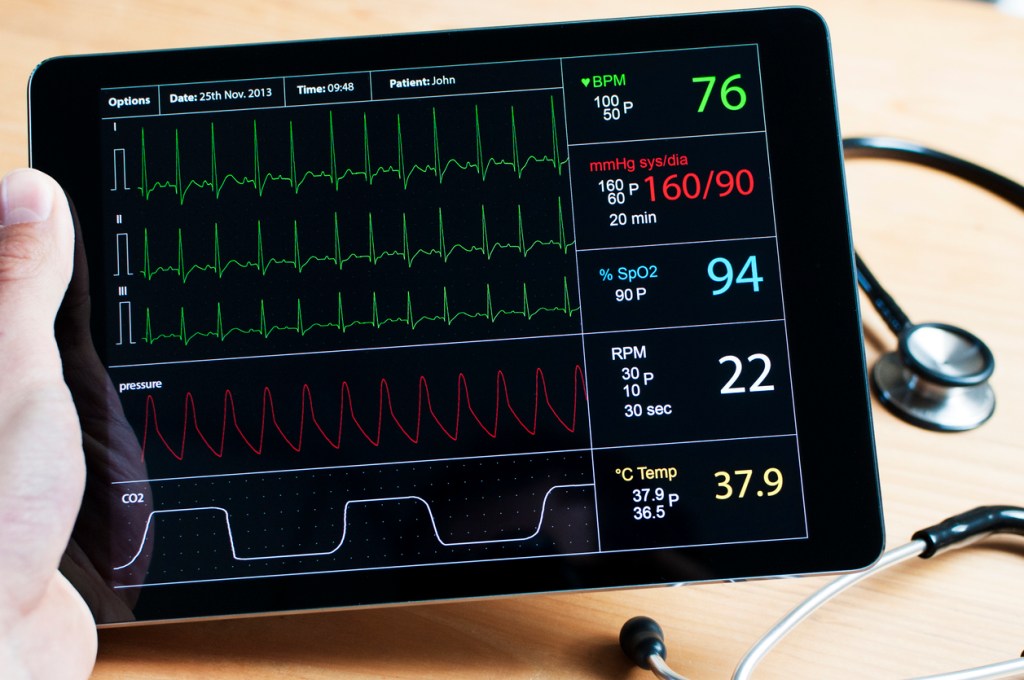
Doctor holding a digital tablet with a live recorded ecg on it. On the desk in the background is a stethoscope.

The healthy lub-dub sound of your heart valves is one that many people take for granted until they experience or are diagnosed with a heart condition. Things like arrhythmia (irregular heart rate), valvular disease (damage or defects in one of your heart valves), or a history of heart attacks can cause you to become concerned about your cardiac health. As a result, you may want to become more proactive about monitoring your heart rate. Thanks to medical technology, you no longer have to go to the doctor to have an electrocardiogram. You can purchase your own EKG monitor and use it in your own home at your convenience.

What is an At-Home EKG monitor?

An at-home EKG monitor is a portable monitor that you can easily use at home. Sometimes, you can just hold your fingers on the device’s sensors to check your heart rate. Depending on the model you choose, your device may be able to send results to your doctor via Wi-Fi, or transfer the results over the telephone. EKG monitors offer convenience and flexibility, allowing you to deliver your results to your doctor without leaving your home.

Popular At-Home EKG Monitors

There are many at-home EKG monitors available on the market today. They vary based on technological complexity, cost, and the way in which they deliver information to medical professionals. Here are a few inexpensive EKG monitors that you can use in your own home:

  • EMAY portable EKG: This EKG is very inexpensive at $99, and it doesn’t require a smartphone for use. However, it does have smart capabilities to connect with your electronic devices and share with your doctor. One physician indicated that a wonderful feature of this device was clear guidelines as to which readings mean a person needs to get to the emergency room. 
  • AliveCor Kardia Mobile: AliveCor’s model is even less expensive than EMAY’s at $89. It also uses finger/hand sensors for easy, medical-grade readings. The company advertises FDA-approved algorithms. Some customers complain that there is an eventual requirement to pay for a monthly service to fully use the device. 
  • SonoHealth Portable EKG: This portable EKG is much more complex and includes finger sensors and chest leads, which can detect a greater number of abnormalities. 
  • ViATOM’s ECG Monitor: ViATOM’s portable electrocardiogram may be useful for some, but others indicated that it picked up a lot of “noise” that interfered with readings. Other positive reviews indicated it was very simple to use. 
  • Vive Precision EKG Monitor: This EKG is also small, portable, rechargeable, and easy-to-use. It’s the least expensive at $79.99 and connects to smart devices. Some reviewers reported inaccurate readings, but others stated it worked as intended. 

When to Go to the Emergency Room

Talk to your doctor about your specific heart condition, and which symptoms or indicators on the EKG monitor will tell you that you need to get to the emergency room immediately. In many cases, a healthcare professional from the doctor’s office will call you and tell you to get to the ER, after receiving an important medical alert reading from your at-home EKG. That is why it is so important to keep a portable EKG at home, so you can monitor your heart rate, and your doctor can monitor your heart rate, anytime day or night, without you having to schedule a doctor’s appointment.

For more informative articles on healthcare, follow the Avidity Medical Design Blog. To take an online healthcare course, visit the Avidity Medical Design Academy website.

Welcome to Star Trek: 10 New Medical Devices of the Future

screenless displays

Ever watch the newest Sci-Fi episodes (or the older ones) and wonder why your own medical treatment couldn’t be that easy? Here are a few newer medical devices that will bring the futuristic medical treatments straight to your door.

1. The Bionic Eye

Recently in development, but not perfect, is the 3D printing of light receptors onto a glass eye. The silver, which they use as ink, stays where it is put on the rounded glass and produces electric feedback. It is moving on to the next stage of development and designed to increase eye comfort for patients.

2. 3D Print Sockets for Artificial Limbs

girl with curly blonde hair wearing red hoodie against red background holding prosthetic hands and arms together

In the United States, it is not difficult to have a socket fitted to an amputated limb by a person trained in prosthesis in any major city. With the help of cell phone scanning and a 3D printer, patients who live in other countries are receiving low-cost sockets for their amputated limbs. 

3. Contact Lenses For Blood Glucose

smart contact lenses

As the saying goes, “Eyes are the windows to the soul.” They can tell your doctor a thing or two if you are a diabetic. If you have been diagnosed with diabetes, these new “smart” contact lenses can detect and transmit your blood glucose level using your own tears.

4. Virtual Dissection Tables

If you are a student who is trying to learn about the human anatomy, watching a cadaver being dissected might be hard to handle. A new device, called a virtual dissection table, might make it easier. The virtual dissection table allows instructors to virtually dissect a human body, identify diseases, and teach surgical procedures without using a cadaver. 

5. Robotic Assistants

From training long-term residents to helping with physical therapy sessions, new medical devices in the form of robotic assistance have been used to move and assist patients with standing or transferring to wheelchairs. A robot is even being developed to draw blood or insert IVs with ultrasound enhanced vein targeting. 

6. Tattoos

Much like the continuous blood glucose sensors, these tattoos are placed on the body to transmit vital signs to medical devices for continuous monitoring. Biometric tattoos can transmit medical information discreetly, allowing for easier communication with physicians. 

7. Sensors in Teeth

You’re on a strict diet. You lie to your physician about how much you ate. With teeth sensors, those days are gone. These teeth sensors can be embedded in your teeth to determine what, how much, and when you ate. These sensors can even track when and how often you smoke. Your actions and intake are recorded and sent to a smart device, allowing your doctor to see real-time data. 

8. Printed Skin

photo of woman with dark skin wearing gold eyeshadow and lipstick looking down while against black background

If you are a burn victim, skin grafts have been made from the cells of burn victims using 3D printing, to give burn victims a better chance to recover without scars and skin graft rejections. The printed skin procedure also reduces the patient’s recovery time and the risk of infections. Printed skin grafts can be as small or as large as needed, without the skin being taken from other areas of the body.  

9. In Silico Clinical Trials

The medical community no longer recruits patients with certain diseases to try different medical treatments. Clinical trials are now taking place on silicon chips. These silicon chips are made to react like an organ, a drug, or a treatment, thereby reducing the need for human trials. 

10. The Medical ‘Tricorder’

young medical professional using clear tablet to study x-ray and other medical data

Still more futuristic than the present, the tricorder from the popular show Star Trek is in development. A contest is in place to see who can pull together the best functioning device that could scan a being and receive medical-grade information- more than just vital signs. 

The future is closer than we imagine, with only developers’ imaginations holding back their ingenuity. Many new medical devices are in development that will aid in our visits with physicians, treatments, and overall learning.  To keep up to date with medical advancements, follow the Avidity Medical Design Blog.