10 Reasons Why You Should Try It Before You Buy It: The Advantages of Taking a Free Healthcare Course

There are many courses available on the internet, and it is hard to know which one is right for you, and which one suits your needs. Sometimes paying for a course offered by a school that you may be unfamiliar with can be difficult to justify, and you might be hesitant to “take the leap,” so to speak. For this reason, you might want to consider taking a free healthcare course. This is a good first step if you’d like to learn more about different healthcare topics. Here are some reasons why you should consider taking a free healthcare course to “try it before you buy it”:
Reason #1: You get to learn about a new healthcare topic in small “bite-sized chunks” that get straight to the point and don’t waste your time.
Learning about new or unfamiliar topics is the primary advantage of any course, but learning for free is an extra-added bonus. Learning about healthcare is a lifelong process, especially when you are considering a career in the field of healthcare, or you are trying to improve patient outcomes in the clinical setting, or your want to ensure the success of healthcare employees in an organization where you may already work, or you just want to learn more about different healthcare subjects that you can immediately apply to everyday living. You don’t have a lot of time to waste. You want courses that include lecture material offered in small “bite-sized” chunks that get straight to the point and get right to the heart of the information that you need in just a few minutes, without wasting a lot of time, and without covering a lot of extraneous lecture material that may be “nice to know,” but may not really be what you need to know about the subject being taught, and without making you feel overwhelmed or confused, especially if you want to learn more about the healthcare field.
Reason #2: You become familiar with the professional quality of other healthcare courses also, if you later decide to purchase a course.
Taking a free healthcare course before you pay for a course offered by the same school, ensures that you know what type of education you will be getting, and helps you feel confident that you will be getting your money’s worth. You know in advance that your money is being well spent because you’ve already sampled the course material ahead of time.
Reason #3: You learn about the flow of each course, and how to use what you learn in everyday living, by learning the information step by step.
There is nothing worse than taking a course and deciding it was unnecessary. It’s also frustrating to discover that the information presented in the course is too advanced for you to completely grasp, or it doesn’t teach real-world concepts and give you practical real-world examples that you apply to everyday living, and that you can use immediately after you finish the course. If you have already paid for the course, you feel the pain of wasting time and money. A free course lets you know what you are getting into so that you can decide if it is right for you.
Reason #4: You get to decide if you will get your money’s worth if you decide to purchase a course, based on the free course you’ve already taken.
A course should be affordable, and should provide good quality, content, and instruction at the same time. If the quality of the free course is good, you are sure to get the same quality when you choose to pay for a course offered by the same school.
Reason #5: You become familiar with the instructor’s teaching style (even if you’ve never been in the healthcare classroom!).
Instructors teach in different ways. All instructors want to provide valuable information, but sometimes their speaking style simply doesn’t fit the needs of the student. Taking a free course helps you become more comfortable with the instructor’s speaking style and helps you make certain it is right for your learning needs, because you want to retain the information that you learn and you want to be able to use it as soon as you finish the course.
Reason #6: You get to leave reviews for free, without having to purchase a course first.
Educators always want to improve the quality of their courses, and getting feedback from new students is one way to test the quality of the courses being offered by the school. Free courses mean more reviews, and help improve the quality of current course offerings.
Reason #7: You get to leave suggestions, or ideas, for future healthcare courses.
The healthcare environment is always changing, and the educators are always looking for new ideas. New students who leave course suggestions are often the best source of these new ideas, and can help enhance the quality of future courses, or sustain the quality of existing courses.
Reason #8: You immediately transfer what you learn in the free course to everyday situations, just as you would in a paid course.
There are many classes available online, and a good course gives you the skills you need to immediately transfer your learning to real-world situations, where you can apply what you learn as soon as you finish each course. You also have the opportunity to compare the quality of a free course with other courses you may have taken. This proves that the courses are solid, and teach skills that are worth your time and money.
Reason #9: You get to spread the word to friends, family, and colleagues, about the quality and practicality of the free healthcare course you completed.
If you are looking for a course that will improve the education of co-workers or employees, or benefit family members and friends, you can try it out for free first. Don’t rely on a catchy course title. Know what you are recommending by trying it first.
Reason #10: You develop an “avidity,” or an “eagerness” to learn even more about different healthcare subjects covered in other courses.
Taking a free course that offers quality learning peaks your interest and increases the likelihood that you will want to continue to learn more about different healthcare subjects.
If you are looking for a free healthcare course, check out Avidity Medical Design Academy to sign up for “How to Prevent Disease in Your Body (By Eating Fruits and Vegetables!)“. This is a free healthcare course offered by Avidity Medical Design Academy.

Why You Might Want to Think About Holistic Medicine
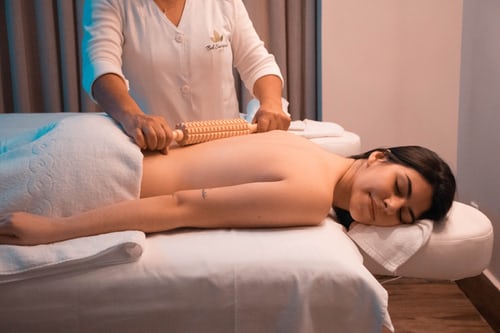
In the world today, the list of what ails us only seems to be growing. While science and medicine do their best to keep up, we would all do well to learn what our options are in order to better understand how to prevent and recover from disease quickly and easily. One option is holistic medicine, a growing field that many people find intriguing.
What Is Holistic Medicine?
Holistic medicine is an approach to medicine that looks at the whole person in order to improve a patient’s health and help each patient live a more vibrant happier life. It begins with an understanding that there should be a flow of life energy throughout the three parts that make up a person. The three parts that make up a person, according to holistic medicine are: the spirit, mind, and body. All three of these parts are interconnected. Because these three parts are interconnected, they must all be considered when working toward wellness. While a traditional medical approach may treat the problem with a medication or surgery, holistic medicine incorporates education on lifestyle changes, self-care, and emotional well-being, in addition to any necessary medication or surgery.
This type of care keeps the focus on the patient as a whole person, instead of looking mainly at the patient’s health problem. According to the American Holistic Health Association, “Optimal health is much more than the absence of sickness. It is the conscious pursuit of the highest qualities of the physical, environmental, mental, emotional, spiritual, and social aspects of the human experience.”

When You Might Want to Consider Holistic Medicine
There are many reasons you might want to consider holistic medicine. Maybe traditional treatment is not working as well as you’d hoped, or maybe traditional treatment comes with dangerous risks and side effects. This is a good time to consult with your doctor about adding a “whole-person approach” to the medical regimen that your doctor prescribes, to help you start learning how to help heal your body from within. At times, traditional medicine is expensive or even totally unavailable. Holistic options offer a simpler approach with options that patients can often utilize at home. Lastly, some patients find the traditional approach to be invasive and intimidating. In general, a holistic medicine route is more gentle and comfortable for the patient. As a patient, you may feel cared for in a way that helps to elevate your overall quality of life, not just your health, and this level of empowerment may help you take healthy steps for the future that can benefit your peace of mind and well being as a whole.
Why You Might Want to Consider a Career in Holistic Medicine
If you’re interested in pursuing a career in holistic medicine, the options are plentiful, and it is certainly a growing field. You can earn your practitioner certification in yoga instructing and massage therapy, for example, in under a year. If you want to become a more advanced practitioner, such as a chiropractor, you can earn your doctor of chiropractic degree after completing post-secondary education and more extensive training. This means greater income potential as a practitioner of holistic medicine. Holistic medicine careers are growing fast. Careers in massage therapy are growing much faster than average with a median income of $41,420 a year and a growth projection of 22% between 2018-2028, according to the Bureau of Labor Statistics. This is likely due to more and more insurance plans allowing for a massage to be covered as the health benefits become clearer. With a short path to become certified, a career in holistic medicine is worth considering.
You can find more articles about healthcare on the Avidity Medical Design blog. Follow our blog to stay up to date on different healthcare careers, and to learn about the many different online healthcare classes offered by Avidity Medical Design Academy, such as “How to Prevent Disease in Your Body (By Eating Fruits and Vegetables!)” New articles and new courses are coming soon, so check back often!
3 Mobile Businesses in the Field of Healthcare For 2019 and Beyond! (Video)
“Volunteer Work That You Can Do to Gain Experience in Healthcare Without a Diploma or GED” (Video)

Volunteer Work That You Can Do to Gain Experience in Healthcare Without a Diploma or GED
In the previous article, you learned about 10 careers in healthcare that you can pursue without a high school diploma or GED. Once you complete training for a healthcare career without a diploma or GED, you need to be able to sell yourself with some experience. This article provides specific steps that you can take to volunteer to gain experience in healthcare without a high school diploma or GED. Employers are more apt to hire people with experience, and volunteer work is a guaranteed way to get it.

1. How to Volunteer as a Home Health Aide
Most home health or hospice organizations gladly accept volunteers in order to meet the needs of their patients. .
2. How to Volunteer as a Certified Nursing Assistant (CNA)
Check out local nursing homes and find out if they’ll accept volunteers. Often, they are more than happy to have more helping hands. This could be an opportunity to get hired in a paid CNA position later.
3. How to Volunteer as a Phlebotomist
The American Red Cross is an excellent choice for those wanting volunteer work with phlebotomist training. Get involved in their blood drives and gain valuable experience you’ll use in your future career and on your resume.
4. How to Volunteer as a Massage Therapist
Once you are trained, volunteering your massage therapy services is welcome at some community events, sports activities, and medical facilities. Not only will you get experience, but you can start building a reputation.
5. How to Volunteer as a Medical Secretary
Because a medical secretary is often required to perform clerical or front desk tasks, volunteering at any type of community event shows an ability to organize. It also shows your interest in participating in community betterment. Talk with your local chamber of commerce or set up a team for a fundraiser such as Relay for Life. Your volunteer work acts like employment history when it comes to getting hired.
6. How to Volunteer as a Dental Assistant
The volunteer opportunities for dental assisting are exciting. Dental assistants are always needed on international dental missions, and your dental care for people in developing countries will almost guarantee employment afterward.
7. How to Volunteer as a Medical Coder
There is a lot of competition for medical coding jobs, and one way to up your chances of hire is to volunteer at the place where you want to work. Check out hospital websites for volunteer opportunities, and make your name recognizable so that your resume isn’t passed over.
8. How to Volunteer as an Ophthalmic Medical Assistant
Volunteering for an ophthalmic mission may not be a possibility for the inexperienced ophthalmic medical assistant, but volunteering with the Lions Club certainly is an option. Volunteer for school vision screenings and show your interest in the world of vision.
9. How to Volunteer as a Medical Transcriptionist
There aren’t really volunteer transcription activities because it is a solo profession, but any volunteer activities in the medical field will show that you have an understanding of how the field of medicine works, which will improve the quality of your transcription. Pay attention to local calls for volunteers. You will likely end up volunteering at fundraisers or healthcare facilities, but you’ll be gaining a working knowledge of the medical content that you will transcribe.
10. How to Volunteer as an Occupational Therapy Aide
Occupational therapy is required for many people with disabilities, so it stands to reason that volunteering for a disability-related organization would be beneficial for employment prospects. Volunteer ideas include the Special Olympics and The Wounded Warrior Project, and they show your compassion for helping people live normal lives.
Volunteering gives potential employers a way to overlook your lack of high school diploma or GED. It shows that you have a true interest in your field and that you’ll be an asset to their organization.
For more informative healthcare articles, visit the Avidity Medical Design Blog.
10 Healthcare Careers You Can Pursue Without a High School Diploma or GED
If you haven’t finished getting your high school diploma or your GED (General Education Diploma), it is difficult to know where to turn for potential employment in healthcare careers. However, the healthcare field has multiple promising career options that don’t always require a diploma to get on-the-job or other training. Check your state’s requirements, and consider the following job opportunities to get your foot in the door of the healthcare field.
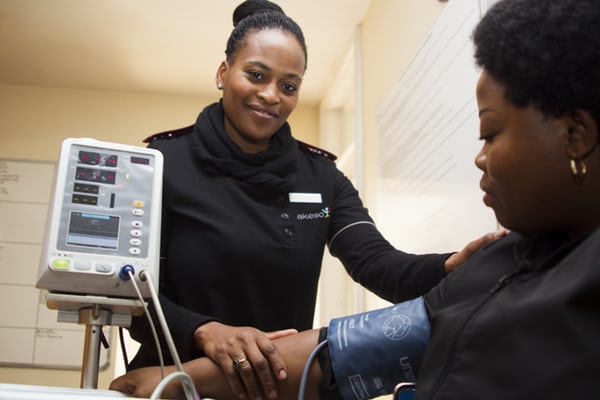
If you are interested in pursuing a career in healthcare, but you don’t have a high school diploma or your GED, then consider becoming:
1. A Home Health Aide
- Description: Home health aides work in people’s homes or care facilities and help them with daily tasks.
- Training: Training requirements vary depending on the facility and may require certification, which typically takes 75 hours of training.
- Job Outlook and Salary: The job outlook in this career is also very promising at 36%. In 2018, the median pay for this career was $24,060/year.
2. A Certified Nursing Assistant (CNA)
- Description: A CNA gives basic medical services to patients in nursing homes and hospitals. This may involve helping to lift and move patients with mobility problems. Nursing assistants often help patients who have difficulty with everyday tasks such as bathing or eating.
- Training: Generally, a CNA program takes 4 to 12 weeks. Some CNA programs may or may not require a GED or a high school diploma. Check with the school to determine whether a high school diploma or GED is required for your particular CNA training program.
- Job Outlook and Salary: The outlook for this career is looking strong with 9% growth expected over the next decade. In 2018, the median pay for this career was $28,530/year.
3. A Phlebotomist
- Description: A phlebotomist is a person who draws blood for multiple reasons in the healthcare field. They work in a variety of settings, including blood banks or research facilities.
- Training: A non-degree certification takes 4 to 8 months.
- Job Outlook and Salary: The outlook for this career is expected to expand faster than many other job opportunities at 23% over the next decade. In 2018, the median pay for this career was $34,480/year.
4. A Massage Therapist
- Description: Massage therapists massage muscles and soft tissue in order to relieve soreness or provide relaxation.
- Training: Training for massage therapy varies from just over 300 hours to about 1,000 hours depending on the program.
- Job Outlook and Salary: The outlook for this occupation is 22% over the next decade. The median pay for this career in 2018 was $41,420/year.

5. A Medical Secretary
- Description: Medical secretaries handle the functioning of medical facilities from a paperwork and communication standpoint. They may be responsible for handling phones, insurance information, and front desk duties.
- Training: There is not always required training, but medical secretary programs generally take 1 to 2 years of formal and on-the-job training.
- Job Outlook and Salary: The outlook is weak for secretaries in general with a decline of 7% expected in the next decade. The median pay for this career in 2018 was $38,880/year.
6. A Dental Assistant
- Description: Dental assistants perform a number of tasks in the dental office, which may include taking x-rays, providing care, and clerical tasks.
- Training: On the job training is the only requirement in some states, but formal dental assisting programs take 1 to 2 years.
- Job Outlook and Salary: The job outlook in this career is not bad at 11% predicted over the next decade, and the median pay for dental assistants in 2018 was $38,660/year.
7. A Medical Coder
- Description: Medical coders learn how to use diagnostic and procedural codes to quantify patient diagnoses and services rendered for billing and other purposes.
- Training: Coding programs typically last a few months to 2 years.
- Job Outlook and Salary: The job outlook in this career is 11% over the next decade, and the 2018 median pay for this category of employment was $40,350/year.

8. An Ophthalmic Medical Assistant
- Description: Ophthalmic medical assistants take patient histories and administer ophthalmic testing during exams. They also assist the optometrist or ophthalmologist in a variety of clinical tasks.
- Training: Certificates are available to further one’s career, but on-the-job training is typically sufficient for employment.
- Job Outlook and Salary: Similar to medical assistants, the job outlook for this field of work is good at 23%, and median pay in 2018 was $33,610/year.
9. A Medical Transcriptionist
- Description: Medical transcriptionists listen to recorded documentation of patient encounters and convert them to a readable format via keyboarding/typing skills.
- Training: Training varies but typically includes medical terminology and electronic health record training.
- Job Outlook and Salary: Due to technology and voice recognition, the outlook for this career is not great and is expected to decrease by 3% over the next decade. The median pay for transcriptionists in 2018 was $34,770/year.
10. An Occupational Therapy Aide
- Description: Occupational therapy aides help people recover and improve normal living and working skills that have diminished as a result of accident or health condition. They do not typically get involved in hands-on care, but rather provide supportive services to occupational therapists and assistants.
- Training: Training varies based on state and position and may require only on-the-job training.
- Job Outlook and Salary: The Bureau of Labor and Statistics groups Occupational Therapy Assistants and Aides together, and they report the outlook of both positions look good, predicting a 31% increase over the next decade. The median pay for aides was $28,160 in 2018.
There are other healthcare careers available that may not require a high school degree or GED equivalent. Many healthcare employers will state on their job requirements that you need a high school diploma or GED equivalent. Don’t let this discourage you. Look up your state’s requirements for the position for which you are applying, and let the employer know that you are the right person for the job.
If you would like to work from home in the field of healthcare, enroll in the course entitled, “How to Make Money in Healthcare Working from Home (Full Time!)” offered by Avidity Medical Design Academy.
Listen to three sample lectures from this course below. Click here to take the full course for only $49.99!
If you are interested in pursuing a healthcare education, check out “How to Learn in the Healthcare Classroom (and ANY Classroom) (in 10 EASY Steps!).” offered by Avidity Medical Design Academy.
“Self-Care for Healthcare Professionals” Video
How to Become a Registered Nurse (and Pass Your Board Exams Once You Do!)
The path to becoming a registered nurse is not an easy one, but it is worth the challenge because of the rewards of the job. Nurses are held in high esteem because they have compassion, altruism and high ethical standards. If you are considering a career in nursing, you probably already know this. How to become a nurse and pass your board exams is the next step.
What is a Registered Nurse?
A Registered Nurse (RN) is a person who has a degree in nursing and has passed board exams required to obtain a nursing license. Registered nurses are healthcare professionals who work in hospitals, clinics, nursing homes and other healthcare facilities in varied positions. Nurses may be responsible for supportive tasks such as taking chief complaints and histories, or they may be more involved in patient care and even perform minor medical procedures. Some RNs are more involved in nurse management and administrative tasks.

As the physician shortage in the United States continues to grow, opportunities for nurses have expanded, and many nurses are elevating their education and job titles to mid-level healthcare providers such as Nurse Practitioners or Advanced Practice Registered Nurses (APRNs). In some states, APRNs are allowed to practice solo and without the supervision of a physician. One of the great benefits in the nursing profession is the possibility to further one’s career past the initial RN licensure.
What are the Education Requirements?
The minimum education requirement to become an RN is an associate’s degree in nursing, but many healthcare facilities require a bachelor’s degree. Nurses are expected to be lifelong learners in order to provide the best care. As a result of this expectation, the Institute of Medicine urges all nurses to get a bachelor’s degree in nursing, with a goal of 80 percent of all nurses having their bachelor’s degree by 2020. This goal may not be met, but it has pushed more nurses to enroll in baccalaureate programs.
How do You Pass Your Board Exams?
After receiving a nursing degree, a nursing graduate must pass the National Council Licensure Examination (NCLEX) in order to become licensed. There are two types of NCLEX exams: the NCLEX-PN and the NCLEX-RN. You will take the NCLEX-PN if you plan to become a vocational nurse or a practical nurse. You will take the NCLEX-RN if you plan to become a registered nurse. Depending on the state, there may be additional requirements. The NCLEX is the national nursing board exam, and you must take this exam in order to become a nurse. The answers to the NCLEX test questions are evidence-based and proven to the satisfaction of the medical field. These questions are not based on nuances or individual techniques that you may have learned during clinical experience. As a result, your chances of passing the boards are greatly increased by practice exams and review courses that give you questions designed to help prepare you for the exam.
- Understand how the NCLEX is formatted.
- Figure out ways to manage your stress.
- Determine the best way to study and the way that is most comfortable for you to study.
- Develop a plan to study.
- Don’t factor in past experience as a way to answer the questions and pass the test.
- Develop good test-taking skills, such as deductive reasoning.
- Believe in yourself, and believe you will pass the test.
What are the Employment Projections?
According to the Bureau of Labor Statistics, the nursing profession is expected to grow by 12% over the next decade. This is a very good outlook, and over 300,000 jobs are expected to be added. Most of the increase in demand for nursing is caused by the shift to placing emphasis on preventive care and on the growing population of elderly with chronic diseases.
What are the Challenges of Becoming a Nurse?
Registered nurses face many challenges, including tough schedules and burnout, depending on the type of work done. Nurses also have to regularly deal with people who are scared, in pain, or upset. Tough days can be very tough, but the success stories make the dedicated nurse forge ahead. This is one of the many reasons nurses get so much respect as medical professionals.
For more informative healthcare articles, follow the Avidity Medical Design Blog.
If you are interested in working from home in the field of healthcare, enroll in the course entitled, “How to Make Money in Healthcare Working from Home (Full Time!),” offered by Avidity Medical Design Academy.
 The Avidity Medical Design Blog